business [at] webideasole [dot] com

Loading...
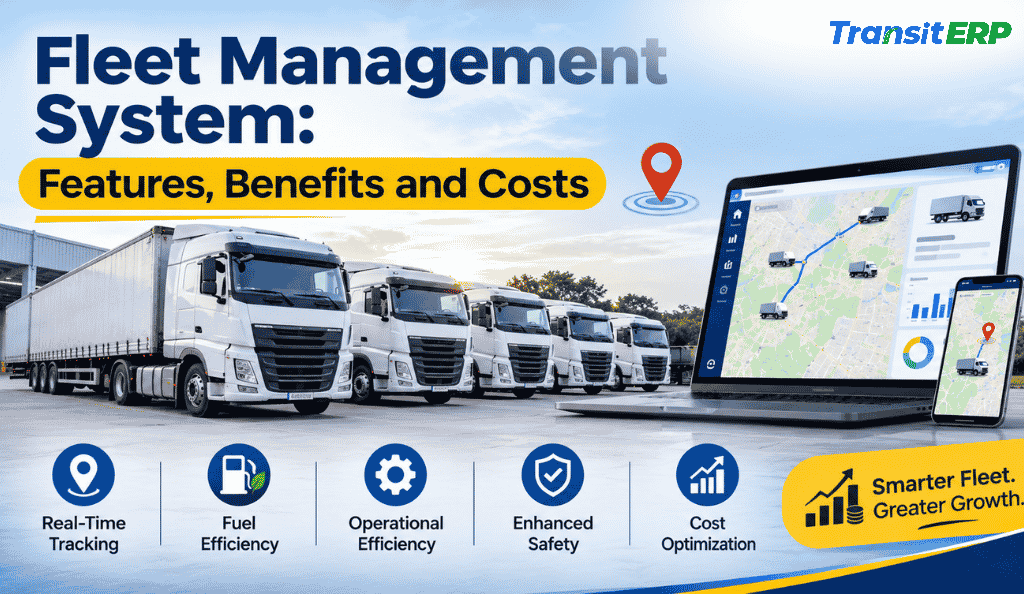
For businesses managing multiple vehicles, struggling with different challenges at a time is not new. These everyday operational challenges often affect delivery schedules, profitability and customer satisfaction.
A well-designed fleet management system helps businesses bring these moving parts under control. From real-time vehicle tracking and driver monitoring to maintenance scheduling and operational analytics, it gives fleet managers better visibility and control over their entire fleet.
But which features actually matter? What benefits can businesses expect, and how much should they budget for implementation? Let’s explore what businesses should look for when investing in fleet management technology.
A fleet management system is a technology-driven platform that helps businesses monitor, coordinate and manage their vehicle fleets through a centralized interface.
It brings together essential operational activities such as vehicle tracking, trip allocation, driver monitoring, maintenance scheduling and expense management.
Although the terms are often used interchangeably, fleet management software can cover a broader range of digital capabilities and workflows.
If you want to understand its working principles, applications and role in business operations, explore our detailed guide on What Is Fleet Management Software.
Fleet management software systems come with different capabilities. A logistics company managing long-distance trucks has different operational requirements from a business running a city-wide delivery fleet or an employee transportation service.
However, certain features are foundational to an effective fleet management platform.
Having multiple features does not automatically make a platform valuable. What matters is how those capabilities improve everyday operations and contribute to business performance.
Here are some of the most meaningful benefits that an efficient fleet management software can provide:
A centralized fleet management system can bring together vehicle location, trip assignments, driver information and maintenance records. This visibility becomes especially important when managing geographically distributed fleets across different cities or states.
The real benefits come from making cost calculations consistently rather than relying on occasional cost-cutting exercises. By analysing vehicle usage and trip-related expenses, you can easily identify where money is being wasted.
Fleet utilisation reports help managers understand how frequently each vehicle operates, how much time it spends idle and how effectively available capacity is being used.
Managers can use driver behaviour records and identify patterns that may increase accident risks, provide feedback, improve driving practices and establish more consistent safety procedures.
Customers expect accurate delivery updates and predictive service. With better trip visibility and dispatch coordination, you can respond to delays sooner and provide more reliable operational updates to customers.
The cost of implementing a fleet management system in India depends on required features, tracking hardware, integrations and deployment model.
A basic vehicle tracking solution and a comprehensive fleet operations platform are two very different investments. Here are the major cost components businesses should consider:
Managing a fleet efficiently requires more than knowing where vehicles are located. Businesses need a connected view of vehicles, drivers, trips, maintenance, expenses and overall operational performance.
A well-planned fleet management system can help achieve this by reducing manual coordination, improving vehicle utilisation, controlling expenses and supporting better decision-making.
If you are looking for one such connected fleet management system, get a demo with TransitERP. This advanced transport management system enables your backend team to have complete control over fleet, driver, delivery, consignment, ePOD, and cost analytics.
Get in touch with our technology experts to discuss your fleet management software requirements.
A fleet management system is a technology-based platform that helps businesses monitor and manage vehicles, drivers, trips, maintenance and operational expenses through a centralized interface.
It collects vehicle and operational data through GPS devices, sensors, mobile applications and manual inputs. The software processes this information into dashboards, reports and alerts, helping managers monitor fleet activities and make informed decisions.
A fleet management system refers to the overall technology setup used to manage fleet operations, including hardware, software and connected devices. Fleet management software is the digital application that processes information and helps manage these activities.
Key features include real-time GPS tracking, route optimisation, driver management, fuel monitoring, vehicle maintenance scheduling, trip management, expense tracking and performance reporting.
The cost depends on fleet size, software capabilities, GPS hardware, integrations and deployment requirements. Subscription-based solutions generally charge per vehicle or user, while custom-developed systems involve an initial development investment and ongoing maintenance expenses.
Yes, most comprehensive fleet management systems support GPS tracking to monitor vehicle locations, routes and movement history. However, GPS tracking may require compatible hardware, connectivity and integration with the software.
It helps identify unnecessary fuel consumption, inefficient routes, excessive idling and recurring maintenance expenses. Analysing these operational patterns allows businesses to reduce avoidable expenditure and improve vehicle utilisation.
Yes. Depending on its capabilities, it can maintain driver records, monitor driving behaviour, record fuel consumption, schedule vehicle servicing and track maintenance expenses through a centralised platform.
A fleet management system primarily focuses on vehicles, drivers, fuel, maintenance and fleet utilisation. A transport management system (TMS) focuses on transportation workflows such as trip planning, consignment management, dispatch, freight billing and delivery coordination. Businesses can integrate both to manage their transportation operations more effectively.
Evaluate your fleet size, operational requirements, essential features, integration capabilities, scalability and overall implementation costs. Choose a solution that addresses your current challenges while supporting future business growth.


Reach out, we’d love to hear from you!